



















Scaling immersive learning with an AI Assistant Facilitator
Business Simulations' collaboration with the AICC

Business Simulations' collaboration with the AICC
Business Simulations designs and delivers immersive, scenario-based learning experiences that help organisations build leadership capability, improve decision-making, and navigate complex business challenges such as digital transformation and organisational change.
Their programmes use interactive simulations facilitated by subject-matter experts, allowing participants to test decisions, experience consequences, and learn in a realistic but safe environment. This hands-on approach is highly effective, but it also relies heavily on expert facilitators to guide sessions, interpret results and provide constructive feedback.

As demand for Business Simulations’ programmes grew, so did the challenge of scale.
Each simulation session requires skilled facilitation to:
Relying solely on expert facilitators limited how many sessions could be delivered at once and made scaling the offering difficult. Business Simulations wanted to explore whether AI could support facilitators, not replace them, by analysing simulation data and offering structured, reliable insights that could guide discussion and feedback.
The challenge was identifying if AI could help scale delivery while preserving the quality, nuance and human judgement that make simulations effective.

Through the Transformer Programme, Business Simulations identified an opportunity to explore an AI-powered “Assistant Facilitator”, a tool designed to support facilitators by analysing simulation performance data and generating structured, actionable feedback.
The ambition was to test whether an AI system could:
If successful, this could significantly improve scalability while maintaining a strong human-in-the-loop approach to learning and development.
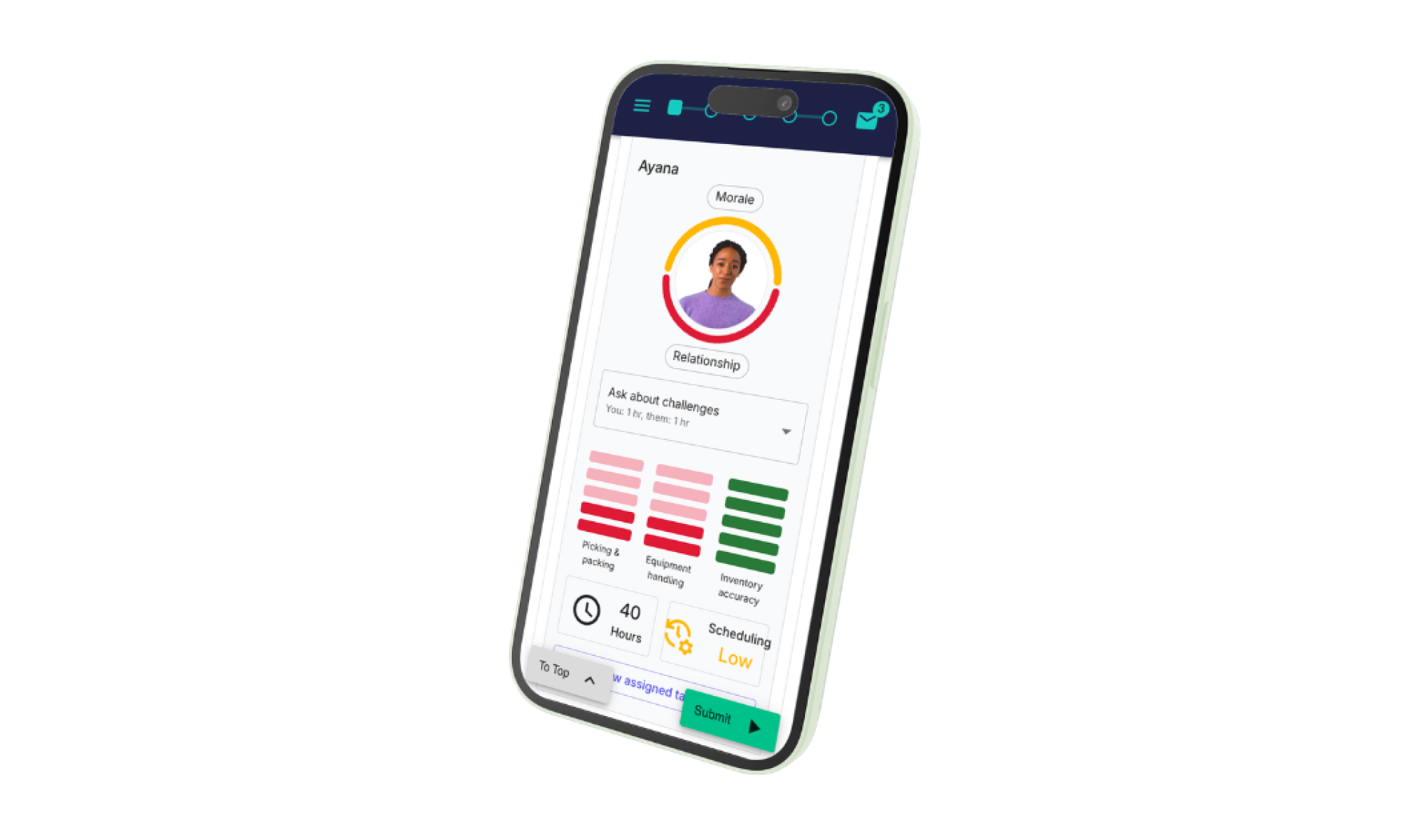
Working in partnership with the Artificial Intelligence Collaboration Centre (AICC), Business Simulations developed a proof-of-concept AI Assistant Facilitator designed to analyse simulation data and provide structured feedback to support facilitation.
The collaboration focused on translating complex simulation outputs into AI-readable formats while ensuring accuracy, explainability and responsible use.
From a technical perspective, the project progressed in two key phases:
Initial experiments tested how large language models (LLMs) responded to raw simulation data. While early outputs appeared convincing, they lacked sufficient accuracy and context, highlighting the risk of hallucinations when data is poorly structured or underspecified.
To address this, the data was restructured into a more human-centred, role based format, making it easier for the AI to understand individuals, skills, tasks and outcomes. Crucially, real simulation context was introduced alongside a carefully designed system prompt grounded in John Adair’s Action-Centred Leadership Framework.
This ensured that AI outputs were not only data-driven, but also aligned with established leadership principles, providing relevant, practical guidance rather than generic advice.
The solution was deliberately designed to be low-cost, model-agnostic and facilitator-led, with AI outputs reviewed and interpreted by a human before being used in sessions.
The proof-of-concept demonstrated strong potential to support scale, consistency and quality across simulation delivery:
By shifting the heavy analytical lifting to the Assistant Facilitator, human facilitators can focus more on discussion, reflection and learning, rather than manual data interpretation.
The result is a scalable support tool that enhances, rather than replaces, expert facilitation.
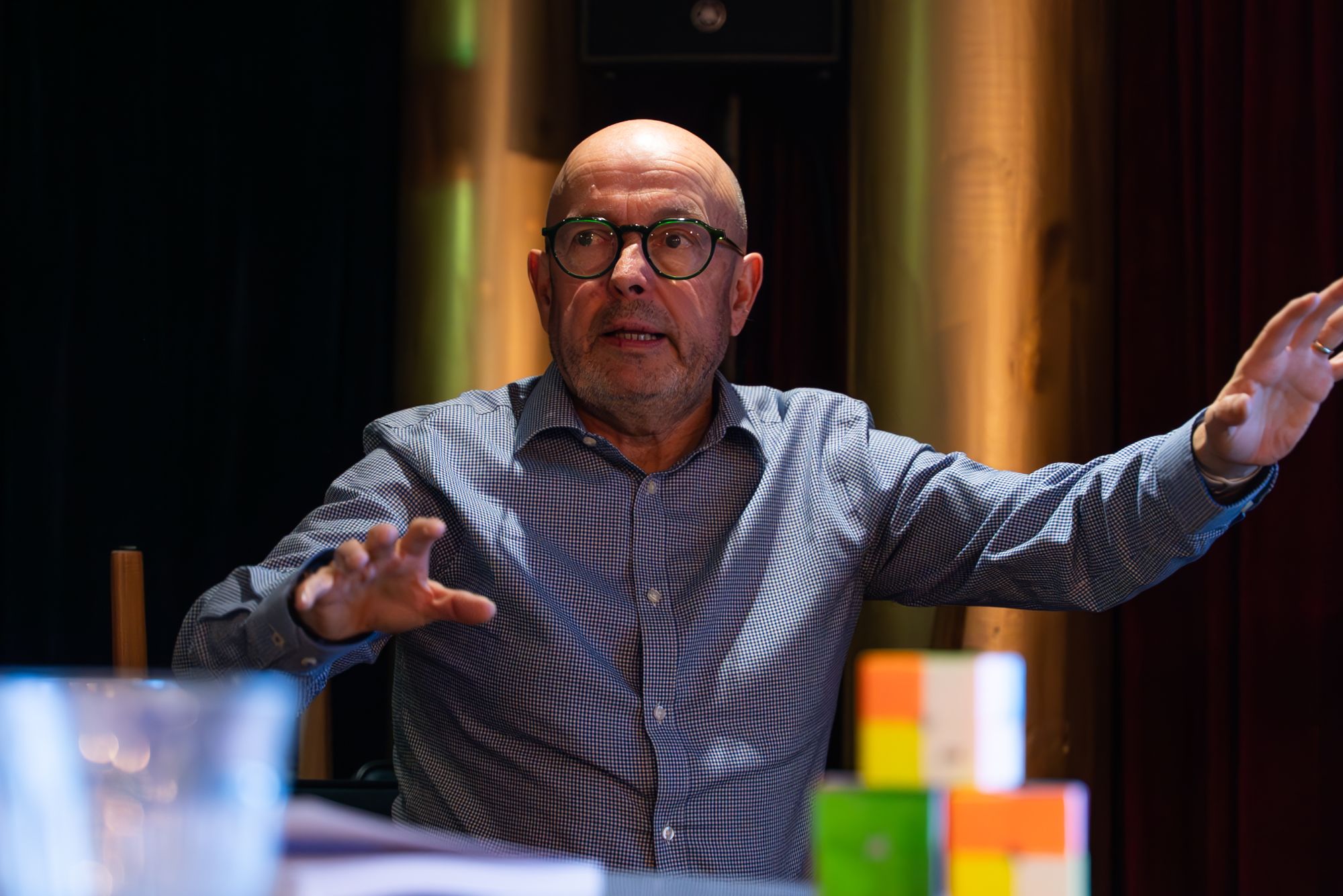
“This project showed how AI can be used thoughtfully to support learning and development, not by replacing facilitators, but by giving them clearer insights and a stronger foundation for discussion. The Assistant Facilitator has real potential to help us scale while maintaining the quality our simulations are known for.”
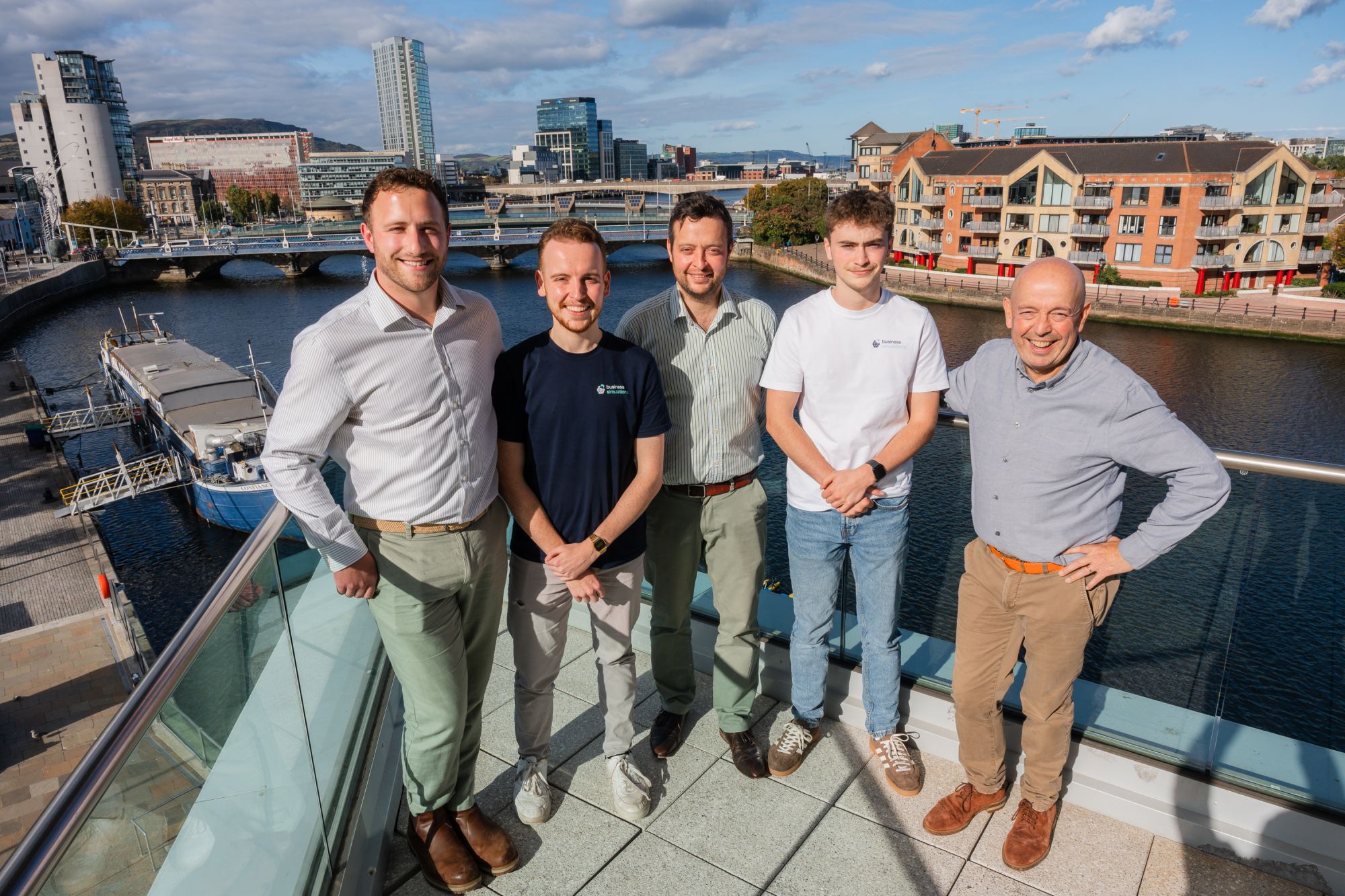
Business Simulations sees this proof-of-concept as the foundation for a scalable AI support layer across its simulation portfolio.
Future development opportunities include:
With strong Responsible AI foundations already in place, including a low-risk CAGE assessment and careful data handling, the project demonstrates how AI can be safely integrated into learning environments to amplify impact without compromising trust.
This Transformer project highlights how AI can be applied responsibly to support experiential learning, enabling Business Simulations to scale delivery while keeping human expertise firmly at the centre of the experience.
AI Assistant Facilitator - An AI-powered tool designed to support (not replace) human facilitators by analysing simulation data and generating structured, actionable feedback.
Artificial Intelligence (AI) - Technology that enables computers to perform tasks that typically require human intelligence, such as analysing data, identifying patterns and generating insights.
Human-in-the-loop - An approach where AI supports decision-making, but a human reviews, interprets and retains final responsibility for outputs.
Large Language Models (LLMs) - Advanced AI systems trained on vast amounts of text data that can generate human-like responses, summaries and analysis.
Hallucinations (AI) - When an AI system produces information that appears convincing but is inaccurate, fabricated or not grounded in the provided data.
System Prompt - A carefully designed instruction given to an AI model that shapes how it interprets data and generates responses.
Model-Agnostic - A system design that allows different AI models to be used interchangeably, avoiding dependency on a single provider.
Proof of Concept (PoC) - An early-stage prototype developed to test whether an idea or solution is feasible and effective.
Retrieval-Augmented Generation (RAG) - an innovative approach in the field of natural language processing (NLP) that combines the strengths of retrieval-based and generation-based models to enhance the quality of generated text.
Please note: This case study was written by the AICC team, with support from AI tools including ChatGPT to assist with refinement.
Innovation thrives through connection. Whether you're an SME, researcher, or professional exploring AI, we’re here to help.